Earlier than many parents expect
The Canadian Dental Association recommends a first assessment within six months of the first tooth appearing, or by the child's first birthday—whichever comes first.
That timing can surprise parents. A one-year-old may have only a handful of teeth, and there may be no obvious problem. But that is exactly the point: the first visit is designed to begin before pain or cavities turn dental care into an emergency.
If you notice swelling, an unusual spot on a tooth, a dental injury, or a developmental concern, do not wait for the birthday milestone. Call sooner.
What can a dentist learn from a few baby teeth?
Quite a lot.
The dentist can check how the teeth and jaws are developing, look for early signs of decay, and review the child's risk factors. Parents can get practical advice about brushing, fluoride, feeding, teething, pacifiers, and what to do after an injury.
Baby teeth are temporary, but their job is not trivial. They help a child chew and speak, and they hold space for permanent teeth. A painful or infected baby tooth can affect sleep, eating, and day-to-day wellbeing long before it is ready to fall out.
Begin brushing with a small, soft-bristled toothbrush as soon as the first tooth appears. Ask the dentist or the child's physician how much fluoride toothpaste to use for the child's age and needs.
What the first appointment usually looks like
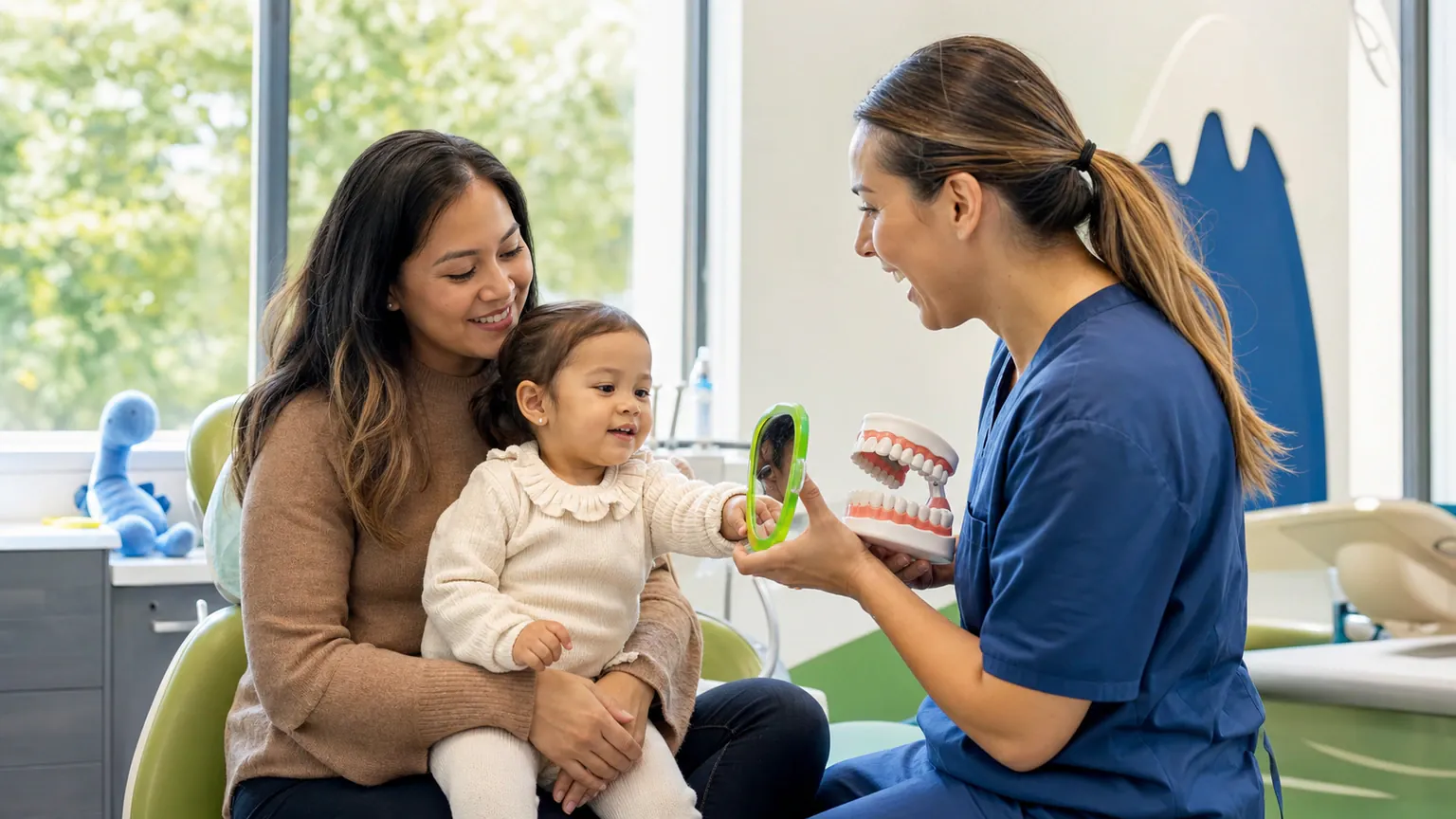
For a baby or toddler, the visit is often brief. The child may remain on a parent's lap while the dentist and parent sit knee-to-knee for a quick look. The dentist may count the teeth, check the enamel and gums, and watch how the bite is developing.
You will probably answer more questions than your child does. Expect to discuss health history, medications, feeding, drinks and snacks, brushing, fluoride exposure, and family dental history. Fluoride varnish may be recommended. X-rays are not an automatic part of a first visit; they are considered when there is a specific reason for them.
A toddler may open happily. They may also turn away, cling, or cry. None of those reactions determines whether the visit was a success. A short exam, a useful conversation with the parent, and one neutral experience in a new setting can be enough for day one.
Preparing without making it a big event
Keep your explanation simple: “The dentist is going to count your teeth and help us keep them healthy.” That is usually enough.
You can count a stuffed animal's teeth or practise opening wide in the mirror, but keep it playful. Rehearsing the visit over and over may signal that something worrying is about to happen.
Try to choose a time when your child is normally rested and has eaten. Bring a comfort item if it helps. Let the clinic know beforehand about sensory, developmental, communication, or mobility needs so the team has time to prepare.
Avoid describing your own frightening dental experiences in front of the child. It is also better not to promise, “Nothing will hurt.” Honest, calm language builds more trust than an absolute promise no one can guarantee.
The habits worth discussing
- Brush twice a day from the first tooth onward.
- Continue helping until your child has the coordination to clean every surface well.
- Start cleaning between teeth when they touch.
- Do not put a child to bed with a bottle of milk, formula, or juice.
- Offer water between meals and keep sugary drinks and snacks from becoming an all-day habit.
- Ask about fluoride, sealants, and sports mouthguards as your child grows.
Our brushing and flossing guide walks through the basic technique.
When a child needs care sooner
Call a dental clinic for tooth pain, swelling, pus, a broken tooth, a tooth that darkens after an injury, or mouth pain that interferes with eating or sleep. A knocked-out permanent tooth is urgent. A knocked-out baby tooth should not be placed back in the socket, but the child should still be assessed promptly.
Trouble breathing or swallowing, major facial trauma, or severe swelling requires emergency medical care. Call 9-1-1 for a life-threatening emergency.
The aim of a first visit is not perfect cooperation. It is to give parents useful guidance, spot concerns early, and let the child begin learning that the dental office is an ordinary place where familiar people help look after their teeth.
Related dental care
Sources
- Basic Dental Care — HealthLink BC
- Your Child's First Visit — Canadian Dental Association
- A Healthy Mouth for Your Baby — National Institute of Dental and Craniofacial Research